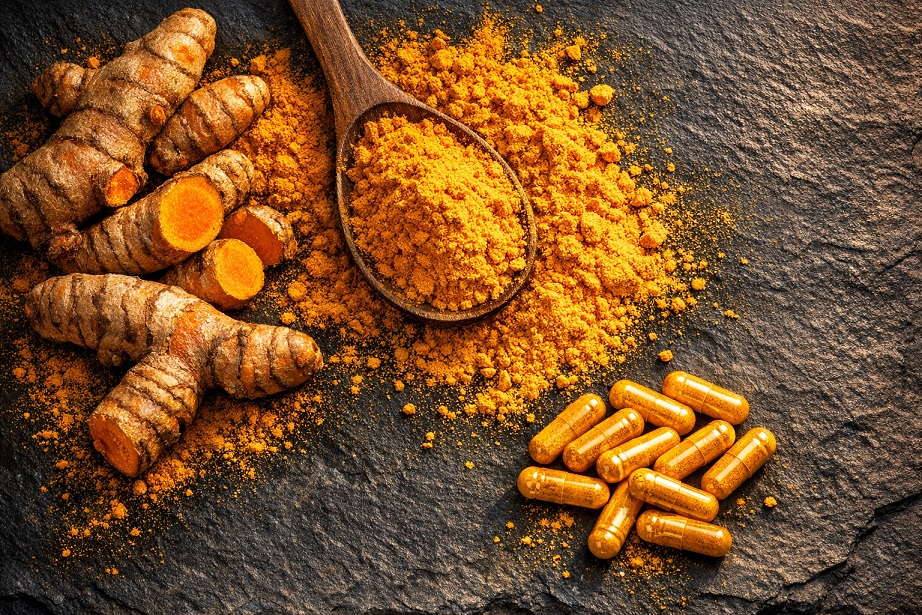
Ask almost anyone interested in natural health about turmeric and they will tell you it is anti-inflammatory. That is broadly accurate, but it is a bit like saying aspirin is analgesic: technically correct, and almost entirely missing the interesting part. The mechanisms through which turmeric’s active compounds work on inflammation are specific, multi-pathway, and genuinely well-characterised by modern research. Understanding them is worth the effort, because it changes how you evaluate claims about turmeric products and how you think about what you are taking and why.
Turmeric, Curcuma longa, has been cultivated and used medicinally in South and Southeast Asia for thousands of years. The modern scientific interest in it dates from the mid-twentieth century, when researchers began isolating and characterising the compounds responsible for its bright yellow colour and its biological activity. What they found was a family of related polyphenol compounds called curcuminoids, of which curcumin is the most abundant and most studied.
Here is what that research has established about how curcuminoids work on the specific mechanisms of joint inflammation, and what it means for how they are best used.
The Inflammatory Pathways That Curcuminoids Target
Inflammation in joints involves a cascade of molecular events, and curcuminoids have been shown to intervene at multiple points in that cascade rather than at a single target. This multi-pathway action is one of the characteristics that distinguishes curcumin from more targeted anti-inflammatory agents, and it is part of the reason why its effects are broad rather than mechanism-specific.
NF-kB: The Master Regulator of Inflammatory Gene Expression
Nuclear factor kappa B, universally abbreviated to NF-kB, is a protein complex that acts as a master switch for the expression of numerous inflammatory genes. When NF-kB is activated, it turns on the production of pro-inflammatory cytokines including interleukin-1 (IL-1), interleukin-6 (IL-6), and tumour necrosis factor-alpha (TNF-alpha), all of which are elevated in arthritic joint tissue and contribute to both the pain and the cartilage-degrading activity associated with osteoarthritis and inflammatory arthritis. Curcumin is one of the most studied natural NF-kB inhibitors, with research consistently demonstrating its ability to prevent NF-kB activation and thereby reduce the downstream production of these pro-inflammatory mediators. The relevance to joint health is direct: lower NF-kB activity in joint tissue means lower production of the cytokines that drive cartilage-degrading enzyme activity and synovial membrane inflammation.
Cyclooxygenase-2 (COX-2) is the enzyme that converts arachidonic acid into prostaglandins, the inflammatory mediators most directly responsible for pain and swelling in inflamed joints. NSAIDs like ibuprofen and naproxen work primarily by inhibiting COX-2, which is why they are effective for short-term joint pain relief. Curcumin also inhibits COX-2 activity, but through a different mechanism from most NSAIDs: rather than directly blocking the enzyme’s active site, curcumin suppresses COX-2 gene expression by inhibiting the transcription factors, including NF-kB, that regulate its production. This means curcumin reduces the amount of COX-2 enzyme available rather than simply blocking it, which is a slightly different approach to the same anti-inflammatory endpoint and may explain why curcumin does not carry the gastrointestinal mucosal risks associated with long-term NSAID use.
LOX Pathway Inhibition: The Complement to COX
Lipoxygenase (LOX) enzymes, particularly 5-LOX, produce leukotrienes from arachidonic acid via a different branch of the inflammatory cascade than COX. Leukotrienes are potent inflammatory mediators that drive the chronic low-grade inflammation associated with osteoarthritis and are implicated in the recruitment of inflammatory cells to joint tissue. Curcumin has been shown to inhibit LOX enzyme activity, which provides inflammatory pathway coverage that complements both its own COX inhibition and the more selective 5-LOX inhibition provided by AprèsFlex® Boswellia serrata extract. In a multi-ingredient joint formula, the LOX pathway is therefore addressed by two different mechanisms, a meaningful breadth of coverage for a pathway that standard anti-inflammatory strategies often miss entirely.
Curcuminoids and Cartilage: Beyond Inflammation
The anti-inflammatory mechanisms of curcuminoids are well-established, but the research has also identified effects more directly relevant to cartilage tissue itself that are worth understanding separately from the inflammatory story.
Inhibition of Cartilage-Degrading Enzymes
In arthritic joint tissue, matrix metalloproteinases (MMPs) and aggrecanases actively degrade the structural components of cartilage, breaking down collagen and proteoglycans faster than chondrocytes can rebuild them. Curcumin has been shown to inhibit MMP gene expression through its NF-kB pathway effects, since several MMP genes are NF-kB-regulated. This positions curcumin as having potential cartilage-protective effects that go beyond simply reducing inflammatory pain: by reducing MMP production, it may slow the enzymatic degradation of the cartilage matrix that drives structural joint deterioration. This mechanism overlaps with and complements the direct MMP inhibitory effects of AKBA from AprèsFlex®, providing two routes to the same cartilage-protective endpoint.
Chondrocyte Protection Under Inflammatory Stress
Research has also shown that curcumin can protect chondrocytes from the apoptotic (cell death) effects of pro-inflammatory cytokines. In osteoarthritic joints, elevated cytokine levels trigger chondrocyte death, reducing the population of the cells responsible for cartilage maintenance. By inhibiting the inflammatory signals that trigger chondrocyte apoptosis, curcumin may help preserve the chondrocyte population that cartilage depends on for ongoing maintenance. This is a more subtle mechanism than either pain relief or enzyme inhibition, but it has potentially meaningful implications for the long-term preservation of cartilage maintenance capacity in aging joints.
The Research Picture: Clinical Evidence for Curcuminoids in Joint Health
The laboratory and cellular evidence for curcumin’s anti-inflammatory mechanisms is compelling, but the translation to clinical outcomes has historically been complicated by the bioavailability problem covered extensively in our article on CurcuWIN® vs. standard curcumin. Clinical trials using standard curcumin have produced inconsistent results, largely because standard curcumin is so poorly absorbed that many doses barely register in systemic circulation at all. Trials using bioavailability-enhanced curcumin forms have produced considerably more consistent and clinically meaningful results.
A systematic review and meta-analysis of randomised controlled trials examining curcumin preparations for osteoarthritis, published in the Journal of Medicinal Food, found significant reductions in pain and physical function limitations across the trials examined, with the most consistent effects in trials using enhanced-bioavailability preparations. Comparison studies pitting bioavailable curcumin preparations against NSAIDs for knee osteoarthritis have found broadly comparable pain relief outcomes, with curcumin showing a more favourable tolerability profile.
The research picture is strong enough to support curcumin as a meaningful component of a joint support approach, provided the form used addresses the bioavailability issue. Treating curcumin as a single-ingredient solution for joint pain, however, sells short both the complexity of joint inflammation and the value of the complementary mechanisms provided by a multi-ingredient formula. Curcumin’s multi-pathway anti-inflammatory action pairs well with the structural cartilage support of glucosamine and chondroitin-class compounds, the collagen synthesis support of MSM, and the complementary 5-LOX inhibition of boswellia.
Turmeric in Food vs. Curcumin Supplements: Understanding the Gap
A frequently asked question is whether eating turmeric in food, in curries or as a golden latte, provides the same benefits as curcumin supplementation. The answer is a clear and practical no, for two compounding reasons. First, culinary turmeric contains approximately 2 to 5 percent curcumin by weight. The amount of turmeric a person realistically consumes in food, even a generous daily serving, provides a fraction of the curcuminoid dose used in clinical research. Second, the curcumin in food is subject to the same poor bioavailability as standard curcumin supplements, without any of the delivery technologies that improve absorption. Cooking with turmeric has general health value, and the traditional combination of turmeric with black pepper and fat is a folk wisdom approach to improving absorption that has some validity, but it does not produce the curcuminoid concentrations in joint tissue that research associates with clinically meaningful anti-inflammatory effects. For those goals, a well-formulated supplement using a high-bioavailability curcumin form is necessary. Our article on anti-inflammatory foods for joint health covers where dietary turmeric fits within a broader food-based approach, and why supplementation addresses a different tier of the same strategy.
Frequently Asked Questions
- Are all three curcuminoids in turmeric important, or just curcumin?
- Turmeric contains three primary curcuminoids: curcumin (typically 70 to 75 percent of the curcuminoid content), demethoxycurcumin, and bisdemethoxycurcumin. While curcumin is the most studied, research suggests that the other two curcuminoids have distinct biological activities and that the three together produce broader anti-inflammatory effects than curcumin in isolation. Full-spectrum curcuminoid extracts that preserve all three compounds are generally preferable to products isolated to curcumin alone for this reason.
- Can curcumin be taken with other anti-inflammatory medications?
- Curcumin should be used with caution alongside blood-thinning medications, as it has mild anticoagulant properties. It may also interact with diabetes medications by affecting blood glucose regulation. Taking curcumin alongside NSAIDs is generally not a significant safety concern, though redundant coverage of the same inflammatory pathway makes the combination less rationally designed than pairing curcumin with complementary anti-inflammatory compounds like boswellia. Anyone on prescription anti-inflammatory therapy should discuss curcumin supplementation with their prescribing physician.
- Does turmeric stain teeth or skin when taken as a supplement?
- Capsule-based curcumin supplements do not stain teeth, as the curcuminoids are contained within the capsule and do not contact tooth surfaces. Skin discolouration from supplemental curcumin is not a recognised concern at standard supplemental doses. The bright yellow staining associated with turmeric in cooking comes from handling the raw powder, which capsule delivery avoids entirely.
- Is there a difference between turmeric supplements and curcumin supplements?
- Yes, and it matters for dosing. Turmeric supplements often contain ground turmeric root or a modest extract and may have a lower curcuminoid concentration than dedicated curcumin supplements. Curcumin supplements typically use a standardised extract with a specified curcuminoid percentage and, in better-quality products, a bioavailability-enhancing delivery technology. For joint health applications where curcuminoid dose and bioavailability are critical, a dedicated curcumin supplement with a specified delivery technology is more reliably effective than a general turmeric supplement.
The science behind turmeric and curcuminoids is genuinely robust, and it holds up to scrutiny in a way that much botanical anti-inflammatory research does not. The key is understanding that the science applies to specific, bioavailable forms of curcumin at adequate doses, not to turmeric powder in a capsule or a cup of golden milk. Getting that detail right makes the difference between a supplement that delivers on its mechanism and one that provides nothing more than an expensive placebo effect. Our article on whether turmeric and boswellia can replace NSAIDs for joint pain takes the clinical evidence one step further by comparing the two approaches directly.