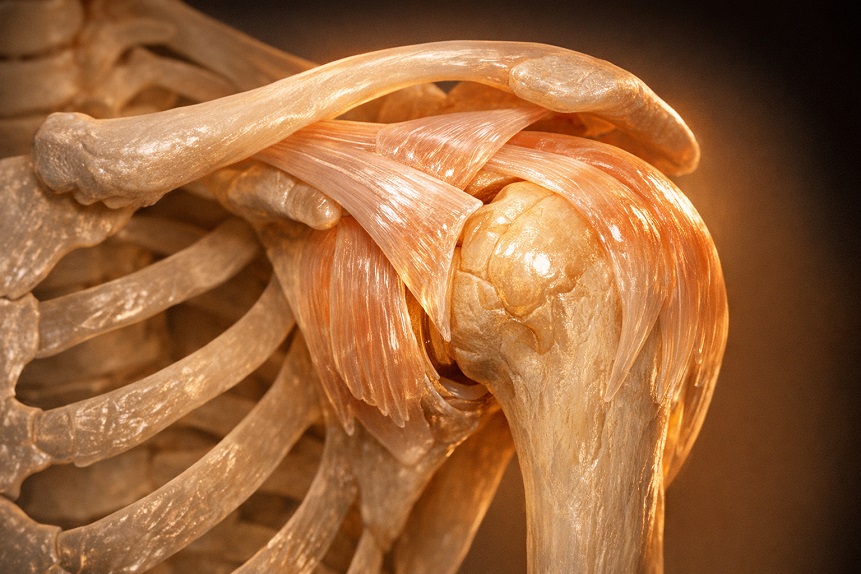
Collagen has become one of those words that appears on everything from face creams to protein powders, which has made it slightly difficult to take seriously. Strip away the marketing noise, though, and you are left with a genuinely remarkable protein that underpins the structural integrity of almost every connective tissue in your body, including the ones that keep your joints working properly.
In the context of joint health specifically, collagen is not a peripheral player. It is the primary structural material in cartilage, tendons, and ligaments, the three tissue types most responsible for how a joint feels and functions over a lifetime. Understanding what collagen does, why its production declines with age, and what can be done to support it is one of the most practically useful things you can know about joint biology.
This article focuses particularly on OptiMSM®, a form of methylsulfonylmethane that has attracted research attention for its role in the collagen synthesis pathway, and why the sulphur it provides is more relevant to joint health than most people realise.
What Collagen Actually Does Inside a Joint
Collagen is the most abundant protein in the human body, accounting for roughly a third of total protein by mass. It is not a single molecule but a family of related proteins, of which Type II collagen is the most relevant to joint health. Type II collagen is the primary structural component of articular cartilage, and its unique triple-helix molecular structure gives cartilage the tensile strength it needs to resist the pulling and twisting forces that accompany movement.
Collagen in Cartilage: The Framework for Everything Else
Think of collagen in cartilage as the steel framework of a building. It provides the scaffold within which other cartilage components, particularly the proteoglycans that attract and retain water, are organised and held in place. Without an intact collagen framework, cartilage loses its architecture and its water-retaining capacity, which means it loses both its structural integrity and its shock-absorbing properties simultaneously. Early cartilage degeneration consistently involves damage to the collagen network before the tissue itself visibly thins, which is one reason why maintaining collagen quality is a meaningful preventive goal rather than merely a reactive one.
Collagen in Tendons and Ligaments: Tensile Strength Under Load
While cartilage relies primarily on Type II collagen, tendons and ligaments are built largely from Type I collagen, arranged in dense, parallel fibre bundles that are oriented along the direction of the forces they are designed to resist. This arrangement gives tendons and ligaments extraordinary tensile strength, but it also means they are relatively poorly served by attempts at repair. The parallel fibre orientation of healthy tendon and ligament collagen is replaced by less organised, more randomly oriented fibres during healing, which is why healed ligaments and tendons often remain slightly more vulnerable to reinjury than the original tissue. Providing the body with consistent supplies of collagen synthesis ingredients, including adequate sulphur from sources like OptiMSM®, supports ongoing maintenance of these tissues in their healthy state.
Why Collagen Production Declines With Age and What That Means
The body’s capacity to synthesise collagen declines gradually and significantly with age. From roughly the mid-twenties onwards, collagen production begins to fall, and the ratio of collagen breakdown to collagen synthesis shifts progressively in the wrong direction. By the time most people reach their fifties, collagen production is meaningfully below what it was in their youth, and the quality of the collagen produced also changes, with shorter chain lengths and less effective cross-linking between fibres.
In practical terms, this means that the collagen scaffolding in cartilage becomes less robust over time, tendons and ligaments become marginally less resilient, and the structural tissues surrounding joints are less efficiently maintained. This is not a catastrophic or sudden change, but its cumulative effect over decades is significant. It contributes to the gradual stiffening of joints, the increased recovery time after heavy activity, and the reduced tolerance for repetitive loading that many active adults notice from their forties onward.
Several factors accelerate collagen loss beyond the normal rate of aging: smoking, high sugar intake (which drives a process called glycation that cross-links and stiffens collagen fibres), chronic oxidative stress, and nutritional deficiencies in the raw materials the body uses to make collagen. Conversely, adequate nutritional support for collagen synthesis, combined with regular mechanical loading of connective tissues, can meaningfully support the maintenance of collagen quality and quantity.
OptiMSM® and the Sulphur Connection to Collagen Synthesis
Methylsulfonylmethane, or MSM, is an organic sulphur compound found naturally in small amounts in some foods, including garlic, onions, and certain vegetables. OptiMSM® is a specific, highly purified form produced through a multi-stage distillation process that removes impurities present in lesser-quality MSM products, resulting in a form that is particularly consistent in quality and bioavailability.
Why Sulphur Is a Collagen Production Requirement
Collagen synthesis requires sulphur. Specifically, the amino acids cysteine and methionine, both of which contain sulphur, are essential components of the collagen production pathway. Sulphur is also required for the formation of disulphide bonds that stabilise the triple-helix structure of collagen molecules, and for the synthesis of glutathione, the body’s primary antioxidant, which protects collagen from oxidative damage. When dietary sulphur is insufficient, which is more common than most people realise given the decline of sulphur content in intensively farmed soils and produce, collagen synthesis and maintenance can be compromised at a foundational level.
What the Research Shows About MSM and Joint Tissues
Clinical research into OptiMSM® and joint health has produced results across several relevant endpoints. Studies have found reductions in joint pain and improved physical function in people with knee osteoarthritis. Research has also documented anti-inflammatory effects, with MSM shown to reduce markers of oxidative stress and inflammatory signalling. In the context of athletic recovery, OptiMSM® has been studied for its effects on muscle damage and joint comfort following exercise, with results suggesting it can reduce post-exercise joint discomfort and support faster recovery of joint function. The mechanism underlying these effects includes both the direct supply of sulphur for connective tissue maintenance and the antioxidant protection that adequate sulphur enables through glutathione synthesis.
OptiMSM® in Combination With Other Joint Support Ingredients
OptiMSM® does not operate in isolation. Its effects on collagen synthesis and connective tissue maintenance are complementary to the structural support provided by Glucosamine Sulfate 2KCL and Phytodroitin™, and its antioxidant properties work alongside the anti-inflammatory mechanisms of CurcuWIN® and AprèsFlex® Boswellia serrata extract. This is a meaningful illustration of why multi-ingredient joint support formulas addressing several biological mechanisms simultaneously tend to produce more consistent results than single-ingredient approaches targeting just one pathway. The collagen synthesis story is one thread in a larger fabric of joint tissue maintenance, and OptiMSM® is the thread that often gets the least attention despite being structurally foundational.
Practical Implications: Supporting Collagen From the Inside Out
The collagen story has a practical dimension that goes beyond supplementation. Vitamin C is a required cofactor for collagen synthesis, and its absence causes collagen production to fail entirely (this is the mechanism behind scurvy, which is essentially collagen failure). Most people in developed countries get adequate vitamin C, but it is worth being mindful of intake if you are specifically targeting connective tissue health. Zinc is another cofactor for collagen synthesis enzymes, and amino acid intake from dietary protein provides the raw material building blocks.
Mechanical loading also matters. Tendons and ligaments respond to appropriate tensile stress by upregulating collagen production in the stressed fibres. This is why strength training, done sensibly, supports tendon and ligament health rather than degrading it. The key word is appropriate: sudden or excessive loading damages collagen faster than it can be repaired, while gradual, progressive loading stimulates the maintenance and strengthening of connective tissue. This is a balance worth understanding rather than avoiding exercise out of concern for joint tissues.
For a broader look at the connective tissue maintenance picture and how OptiMSM® fits into it alongside other key ingredients, our deep dive on OptiMSM® and connective tissue covers the science in greater depth. And if you are interested in how the physical side of joint maintenance connects to what you put into your body, our article on exercises that support joint health is a useful complement to the nutritional picture this article covers.
Frequently Asked Questions
- Should I take a collagen supplement instead of, or alongside, MSM?
- These address different aspects of the collagen story. Collagen supplements provide hydrolysed collagen peptides that the body may use as building blocks for collagen synthesis. MSM provides the sulphur required for the collagen synthesis process itself and for the structural stabilisation of collagen molecules. There is research supporting both approaches, and they are not mutually exclusive. For joint-specific applications, MSM’s broader anti-inflammatory and antioxidant properties give it a wider functional remit than collagen supplementation alone.
- How long does OptiMSM® take to produce noticeable effects on joint comfort?
- Clinical studies suggest that measurable improvements in joint comfort and function from MSM supplementation typically emerge over four to twelve weeks of consistent use. This is consistent with the biology: connective tissue turnover is slow, and supporting the synthesis pathway does not produce immediate structural changes. Short-term anti-inflammatory effects may be noticed sooner, but the structural benefits to collagen-rich tissues develop gradually with sustained supplementation.
- Is the MSM in food sources sufficient for joint health support?
- Dietary MSM occurs naturally in some foods but at concentrations far below the amounts used in clinical research. Processing, cooking, and the declining sulphur content of modern agricultural soils reduce MSM content in food further. Most people relying solely on dietary MSM are unlikely to be achieving the tissue concentrations that research associates with joint health benefits. Supplementation with a quality form like OptiMSM® is generally considered necessary to reach clinically relevant levels.
- Does Type I or Type II collagen matter more for joint health?
- Both matter, but for different structures. Type II collagen is the primary structural protein of articular cartilage and is most directly relevant to the shock-absorbing and friction-reducing functions of joints. Type I collagen is the dominant form in tendons and ligaments and is critical for joint stability. A comprehensive approach to connective tissue health benefits from supporting both, which is one reason why sulphur supply through OptiMSM® is broadly relevant rather than targeted at only one joint tissue type.
Collagen is the connective thread, in a very literal sense, that holds the joint system together. Supporting its production and maintenance is one of the most evidence-based things you can do for long-term joint health, and OptiMSM® is one of the most compelling ways to do it. To see how this fits within a broader joint support strategy, our overview of what joints are actually made of provides the structural context that makes all of this biology make sense.