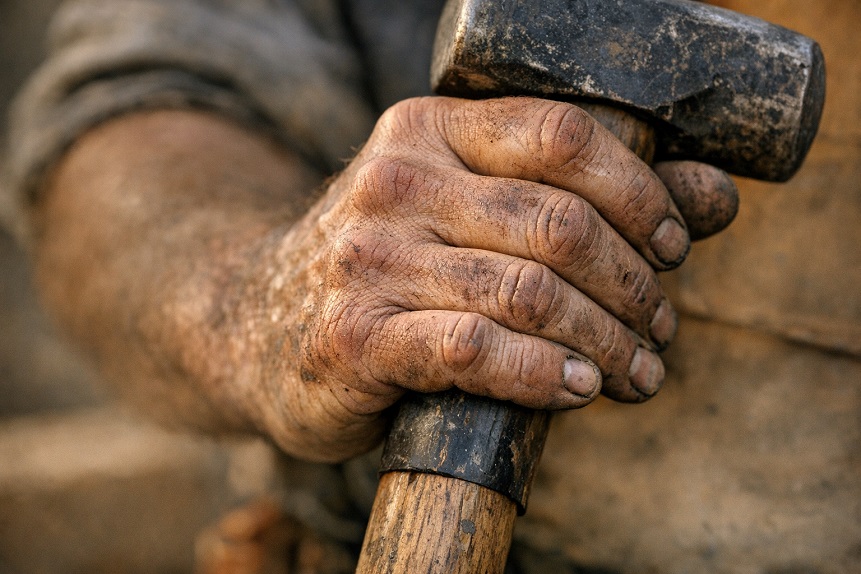
People who work with their bodies for a living understand something about joint health that office workers and recreational athletes often learn only in retrospect: that the cumulative toll of repetitive physical work accumulates over years in ways that are easy to ignore until they are impossible to. The carpenter whose knees have done thousands of hours of kneeling. The electrician whose shoulders have reached overhead daily for a quarter century. The landscaper whose hips have absorbed impact through uneven terrain since their twenties. These are not abstract joint health statistics. They are the lived physical biographies of people whose working lives are written in their joints as much as their memories.
The joint health challenges of manual work differ from those of recreational athletes in important ways. The loading is not periodic and chosen: it is daily, sustained, and non-negotiable. Recovery is often compressed into a standard working week without the periodised rest that athletic training programmes build in. And the financial reality of many trades means that joint problems translate directly into income problems, which creates pressure to push through symptoms that should be addressed rather than overridden.
Here is an honest account of what manual work does to joints, which trades carry the heaviest cumulative risk, and what nutritional joint support looks like for people who cannot afford to scale back their physical output.
The Occupational Joint Health Research: What the Numbers Actually Show
The research on occupational joint health is among the most robustly established dose-response data in musculoskeletal medicine. Unlike the disputed epidemiology of recreational activities, the connection between specific physical trades and elevated joint disease rates has been replicated across multiple countries and occupational cohorts with consistent results.
Knee osteoarthritis rates are significantly elevated in occupations involving kneeling, squatting, and heavy lifting: floor layers, roofers, miners, farmers, and construction workers all show substantially higher rates than the general population. The degree of risk increases proportionally with years in the occupation and with the proportion of the working day spent in high-risk postures. Hip osteoarthritis is elevated in farmers, forestry workers, and those performing heavy manual lifting regularly. Shoulder osteoarthritis and rotator cuff degeneration are strongly associated with sustained overhead work, with studies of workers in overhead trades finding significantly higher rates of both symptomatic and imaging-confirmed shoulder joint changes than in matched non-overhead workers. The evidence is not tentative or controversial: this is one of the clearest cause-and-effect relationships in occupational medicine.
The Joints Most at Risk by Trade Category
While the general occupational joint health picture is consistent, the specific joints most at risk vary meaningfully by trade, and understanding this guides both injury prevention strategies and supplementation priorities.
Knees in Flooring, Roofing, and Ground-Level Trades
Occupations that require sustained kneeling or crouching place the knee joint in positions of significant flexion under compressive load, and the patellofemoral joint in particular bears forces during sustained kneeling that are substantially higher than during normal walking. The medial tibio-femoral compartment bears most of the load in the more common semi-squat postures of trades like plumbing, electrical work, and tiling. Cartilage in these compartments accumulates microscopic damage faster than it is repaired under sustained daily loading conditions, and the rate of this accumulation is directly related to how many years the trade has been performed and how many hours per day are spent in the high-load positions. Glucosamine Sulfate 2KCL and Phytodroitin™ provide the most directly relevant structural support for knee cartilage maintenance under these conditions, supplying the building blocks for proteoglycan synthesis that the accelerated matrix turnover of heavy occupational knee loading demands.
Shoulders in Overhead Trades
Electricians, plasterers, painters, and anyone else whose trade requires sustained overhead work accumulates shoulder joint stress through a combination of mechanisms: the rotator cuff tendons work hardest in overhead positions and are most vulnerable to compression between the humeral head and the acromion; the glenohumeral cartilage experiences atypical loading patterns in overhead postures; and the acromioclavicular joint takes significant compressive and shear stress from heavy overhead lifting. OptiMSM® is the most relevant ingredient for the collagen synthesis maintenance of rotator cuff tendons in this population, and the anti-inflammatory management of CurcuWIN® and AprèsFlex® addresses the inflammatory component of the shoulder joint changes that sustained overhead work generates. Our article on how repetitive motion damages joints covers the mechanical details of this accumulation process.
Hips and Lumbar Spine in Heavy Lifting Trades
Trades involving regular heavy manual lifting, including warehousing, removals, landscaping, and construction materials handling, place the hip joints and lumbar facet joints under high compressive and shear loads repeatedly throughout the working day. The hip’s ball-and-socket design is robust under normal loading but can be stressed beyond its adaptive capacity by decades of heavy lifting, particularly in postures that are mechanically suboptimal due to workplace constraints. Anti-inflammatory support through CurcuWIN® and AprèsFlex® is relevant to managing the chronic low-grade hip and lumbar facet joint inflammation that heavy lifting trades accumulate, and the structural support of glucosamine and Phytodroitin™ addresses the cartilage maintenance demands of high compressive loading.
Why Manual Workers Often Underuse Joint Support and What to Do About It
There is a cultural dimension to joint health in physical trades that deserves acknowledgment. The expectation that physical discomfort is a normal and unavoidable part of the job, and that using supplements or seeking joint health support signals weakness or excessive caution, is prevalent in many trade communities. This cultural norm is responsible for more long-term joint damage than any specific occupational exposure, because it delays the early intervention that could meaningfully slow deterioration at the stage when slowing it is most feasible.
The reframe worth considering is that looking after your joints is not different in principle from maintaining the tools of the trade. A tradesperson who neglects tool maintenance watches their equipment become unreliable and eventually unusable. The joints are the original tools, and the ones that cannot be replaced. Treating their maintenance as a professional responsibility rather than an optional health indulgence changes the calculus in a way that makes practical sense within a trade context. Joint supplementation is not a sign of weakness: it is the recognition that joints used hard need nutritional support that a standard diet may not reliably provide at the level the occupational loading demands.
Building a Practical Joint Support Strategy for Manual Workers
The practical constraints of physical work mean that joint support strategies need to be straightforward enough to actually implement on a working week schedule. Complex multi-step protocols are unlikely to be sustained. The most practical approach centres on three things: a well-formulated daily joint supplement that covers the key biological requirements, attention to the movement and recovery habits that are within daily control, and early recognition of the warning signals that indicate when symptoms have moved beyond self-management into the territory requiring professional input.
A formula combining Glucosamine Sulfate 2KCL and Phytodroitin™ for cartilage matrix structural support, OptiMSM® for collagen synthesis in tendons and ligaments, and CurcuWIN® with AprèsFlex® for multi-pathway inflammatory management provides the complete nutritional joint support picture for manual workers. The fast-acting anti-inflammatory effects of AprèsFlex® are particularly relevant for workers whose joint discomfort varies with the physical demands of specific tasks or weeks. The longer-building structural support of glucosamine and MSM is the foundation that matters most over a working career measured in decades. For a broader view of how supplementation fits within a complete joint health approach, our guide to building a complete joint health routine covers the lifestyle dimensions that supplement support alone cannot address.
Frequently Asked Questions
- Is it too late to start joint supplements if I have already been doing physical work for twenty years?
- It is never too late to provide the joints with better nutritional support than they have had previously, and the research does not support any threshold beyond which structural support ingredients cease to be beneficial. People with established osteoarthritis have shown improvements in pain and function from glucosamine sulfate in clinical trials, and anti-inflammatory support remains relevant regardless of the degree of existing joint change. Earlier intervention produces better outcomes, but later intervention still produces meaningful benefit compared to continued neglect.
- Can joint supplements allow manual workers to work through pain they otherwise could not?
- This is an important question with a careful answer. Joint supplements support the biological health of joint tissues and reduce inflammatory burden. They are not analgesics, and their appropriate role is not to mask pain that should be prompting rest or medical evaluation. If a joint is producing significant pain under load, the first priority is identifying the cause and whether continued loading is safe, not finding a supplement that enables pushing through the pain signal. Anti-inflammatory support from curcumin and boswellia can reduce background inflammatory aching that makes normal work uncomfortable, but this is different from suppressing acute pain that is protecting a joint from further damage.
- Should manual workers take higher doses of joint supplements than sedentary people?
- The clinical research establishing effective doses for joint support ingredients was conducted primarily in osteoarthritis populations rather than in active manual workers specifically, so direct guidance on dose adjustment for occupational loading is limited. The general principle that higher demand on connective tissues creates greater need for nutritional support for their maintenance is biologically reasonable, but there are practical limits: doubling dosages of glucosamine or MSM beyond the researched ranges does not necessarily produce proportionally greater benefit and increases cost without clear evidence of additional effectiveness. Consistent daily use at researched effective doses is more important than attempting to scale doses to perceived physical workload.
- Are anti-inflammatory supplements a safer alternative to over-the-counter painkillers for work-related joint pain?
- For the management of chronic low-grade occupational joint aching, botanical anti-inflammatory supplements have a significantly more favourable long-term safety profile than regular over-the-counter NSAID use, which carries gastrointestinal, cardiovascular, and renal risks with sustained daily use. For many manual workers who have normalised daily ibuprofen or naproxen use as a work management tool, the evidence for bioavailable curcumin and AKBA-enriched boswellia as alternatives with comparable efficacy and better safety profiles is directly relevant. This transition should be discussed with a healthcare professional, particularly for anyone with existing health conditions or on prescription medications.
The joints of manual workers are the most heavily tested joints in the civilian population, and they deserve the same level of thoughtful maintenance that people apply to the expensive equipment and vehicles their trades depend on. Treating joint health as a professional responsibility rather than a personal weakness is the reframe that makes the difference between a working career that ends on your terms and one that ends on your body’s. The nutritional tools to support that choice are better now than they have ever been.