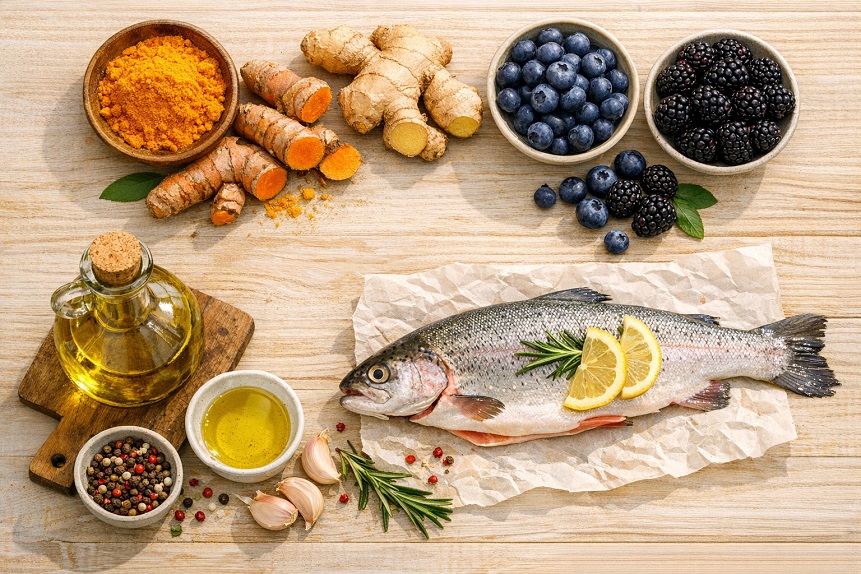
Food is not medicine in any precise pharmaceutical sense, but it is the most consistent daily input your body receives, and what that input looks like over years and decades has a measurable effect on the inflammatory environment in which your joints operate. You cannot eat your way out of significant osteoarthritis, and the reverse is also true: the right dietary pattern cannot reverse structural cartilage damage once it is significant. What diet can do is meaningfully modulate the chronic low-grade inflammatory burden that either accelerates joint deterioration or allows it to proceed at its slowest natural pace.
The research on diet and joint inflammation is nuanced enough that broad prescriptions like “eat more fish and vegetables” are simultaneously accurate and incomplete. The specific compounds that produce anti-inflammatory effects, the doses at which they produce measurable outcomes, and the dietary patterns that deliver them consistently are more specific than the popular nutrition media tends to communicate. This article goes deeper than the general advice, explaining what the food-based anti-inflammatory evidence actually shows and how to put it into practice without overhauling your entire relationship with food.
The Dietary Patterns With the Strongest Anti-Inflammatory Evidence
Before listing specific foods, it is worth establishing that the evidence for dietary anti-inflammatory effects is strongest at the pattern level rather than the individual food level. No single food will transform your joint health. The dietary context in which individual foods are consumed, and the cumulative pattern across meals and days, determines how meaningfully diet affects systemic inflammation.
The Mediterranean Dietary Pattern
The Mediterranean dietary pattern has the most substantial evidence base of any dietary approach for reducing markers of systemic inflammation. Characterised by abundant vegetables, legumes, whole grains, olive oil as the primary fat source, moderate fish consumption, moderate wine consumption with meals, and limited red meat, it consistently produces reductions in C-reactive protein (CRP), interleukin-6, and other inflammatory biomarkers in randomised controlled trials. Its application to joint health specifically has been studied in osteoarthritis populations, with evidence suggesting that closer adherence to a Mediterranean-style dietary pattern is associated with lower joint pain scores and slower joint space narrowing. The mechanism is multifactorial: the polyphenols in olive oil and colourful vegetables, the omega-3 content of oily fish, and the fibre content that supports an anti-inflammatory gut microbiome all contribute to the pattern’s anti-inflammatory effects through different pathways simultaneously.
The Anti-Inflammatory Foods Within This Pattern
Oily fish, including salmon, mackerel, sardines, anchovies, and herring, are the most evidence-dense individual food category for joint health, primarily through their omega-3 fatty acid content (EPA and DHA) that directly inhibits the inflammatory eicosanoid production pathway. Research on fish consumption and joint outcomes has found associations between higher oily fish intake and reduced joint disease severity and progression. Two to three servings per week represents the dose range associated with meaningful anti-inflammatory effects in most research, with daily supplementation with fish oil at clinically relevant EPA and DHA doses producing the most consistent results for people who cannot achieve adequate dietary intake.
Extra virgin olive oil contains oleocanthal, a phenolic compound with documented COX-inhibitory anti-inflammatory properties that has been compared mechanistically to ibuprofen at the concentrations achieved through generous culinary use. This is not a claim that olive oil replaces NSAIDs: the concentrations achieved through diet are lower than pharmaceutical doses, but the chronic daily exposure to oleocanthal through generous olive oil use provides a sustained low-level anti-inflammatory input that accumulates meaningfully over time. Using olive oil as the primary cooking fat and dressing oil is the simplest high-value dietary change for joint health within the Mediterranean pattern context.
Colourful vegetables and fruits, particularly those rich in anthocyanins (berries, cherries, purple vegetables), quercetin (onions, capers, apples), and sulforaphane (cruciferous vegetables: broccoli, Brussels sprouts, kale), provide a range of polyphenol compounds with documented anti-inflammatory and antioxidant mechanisms. Cherries deserve specific mention: multiple randomised trials have examined tart cherry juice for joint outcomes including gout and osteoarthritis, finding reductions in inflammatory markers and joint pain scores that are not seen from equivalent caloric controls. The anthocyanin and other polyphenol content of cherries appears to modulate both uric acid metabolism and inflammatory cytokine production through mechanisms that are increasingly well-characterised.
The Dietary Villains: Foods That Drive Inflammation
The anti-inflammatory dietary case is only half-complete without addressing the other side: the foods and dietary patterns that actively promote the inflammatory burden that joint health depends on managing. These are worth naming specifically because they are far more prevalent in contemporary Western dietary patterns than the anti-inflammatory foods described above.
Ultra-Processed Foods: The Most Consequential Category
Ultra-processed foods, defined by the NOVA food classification system as industrial formulations containing ingredients not used in home cooking (emulsifiers, artificial flavours, colour additives, preservatives, and extensive processing derivatives), consistently produce the most inflammatory dietary signatures in research examining dietary patterns and inflammation biomarkers. They typically combine refined carbohydrates, industrial seed oils with unfavourable omega-6 to omega-3 ratios, and high sodium with minimal fibre, polyphenols, or other anti-inflammatory components. Intervention studies removing ultra-processed foods from the diet and replacing them with whole foods consistently reduce inflammatory markers within weeks, which is one of the strongest signals available that this food category is a primary driver of dietary inflammatory burden.
Added Sugars and Refined Carbohydrates
High dietary added sugar intake promotes inflammation through multiple mechanisms: direct effects on inflammatory cytokine production, promotion of the growth of pro-inflammatory gut bacterial species, contribution to excess body weight that amplifies joint loading and systemic inflammatory burden, and the process of advanced glycation end-product (AGE) formation that cross-links and stiffens collagen, degrading the structural quality of joint-adjacent connective tissue. Reducing added sugar intake, particularly from sugar-sweetened beverages which deliver large fructose loads without the fibre that slows their absorption from whole fruit, is one of the highest-leverage dietary changes for reducing systemic inflammatory burden and therefore for protecting joint health long-term.
Industrial Seed Oils: The Omega-6 Imbalance Problem
Industrial vegetable and seed oils, including corn oil, soybean oil, sunflower oil, and cottonseed oil, are high in omega-6 fatty acids, particularly linoleic acid, which is a precursor to arachidonic acid, the substrate from which COX and LOX enzymes produce pro-inflammatory eicosanoids. The contemporary Western diet delivers omega-6 to omega-3 ratios of approximately 15:1 to 20:1 compared to the evolutionary baseline estimate of 4:1, and this extreme imbalance favours pro-inflammatory eicosanoid production over anti-inflammatory omega-3-derived mediators. Reducing seed oil consumption and replacing cooking fats with olive oil, avocado oil, or butter (for those consuming dairy) meaningfully shifts the omega-6 to omega-3 ratio in a more favourable direction without requiring omega-3 supplementation, though supplementation remains the most reliable way to correct a significant existing deficit.
Building a Joint-Friendly Plate: Practical Application
Translating the above evidence into daily practice does not require a dramatic dietary overhaul. The most practical approach is identifying the two or three highest-leverage changes available within the current dietary pattern and implementing those consistently, rather than attempting to adopt an entirely new dietary framework overnight. For most people in contemporary Western dietary patterns, the highest-leverage changes are: replacing seed oils with olive oil as the primary cooking fat, adding oily fish two to three times per week or supplementing with high-quality omega-3, increasing vegetable variety and volume particularly from coloured vegetables and cruciferous vegetables, and reducing ultra-processed food and added sugar consumption.
The dietary foundation complements rather than replaces targeted joint supplementation. What food-based anti-inflammatory compounds provide is a consistent, broad-spectrum anti-inflammatory input across multiple pathways from multiple compounds simultaneously. What targeted supplementation provides is concentrated, mechanism-specific support that dietary sources cannot deliver at clinically relevant concentrations through normal eating, particularly in the case of curcumin (where bioavailability is the limiting factor regardless of dietary turmeric intake) and boswellia (which has no dietary food source at all). The two approaches address the same biological goal through different routes and at different concentration levels, and they work better together than either does alone. Our article on building a complete joint health routine covers how dietary, lifestyle, and supplementation approaches integrate into a coherent joint health strategy.
Frequently Asked Questions
- Do nightshade vegetables worsen joint inflammation?
- The claim that nightshade vegetables (tomatoes, peppers, aubergine, potatoes) worsen joint inflammation is widespread in popular wellness media but is not supported by the available clinical evidence. There is no robust clinical trial evidence that nightshade elimination improves joint symptoms in the general population. A small number of individuals report subjective improvement after nightshade elimination, and individual food sensitivities are real if uncommon. For people who believe nightshades worsen their joint symptoms, a structured elimination and reintroduction protocol is the most reliable way to test this individual hypothesis, but blanket nightshade avoidance is not an evidence-based recommendation for joint health.
- How long does it take for dietary changes to affect joint inflammation?
- Measurable changes in circulating inflammatory markers (CRP, inflammatory cytokines) from dietary interventions have been documented in research within two to four weeks of significant dietary change. The translation from improved inflammatory markers to noticeable changes in joint comfort takes somewhat longer, as the joint environment responds to reduced systemic inflammatory burden over weeks to months rather than days. Consistent dietary patterns sustained over months produce the most meaningful effects on joint health, consistent with the slow turnover rate of joint tissues compared to inflammatory marker dynamics.
- Is an entirely plant-based diet better for joint inflammation than an omnivorous one?
- The evidence on plant-based diets and joint inflammation is mixed. Well-designed plant-based diets can be highly anti-inflammatory due to their high polyphenol, fibre, and antioxidant content. However, poorly designed plant-based diets heavy in refined carbohydrates and ultra-processed plant foods can be as inflammatory as poor omnivorous diets. Omnivorous Mediterranean-pattern diets have the strongest direct clinical evidence for anti-inflammatory effects in joint populations. The dietary pattern quality matters far more than whether it includes animal products, though excluding processed meat and limiting red meat is supported regardless of the overall dietary approach.
- Are there specific foods that help with rheumatoid arthritis specifically?
- The anti-inflammatory dietary principles described here apply broadly to joint inflammation regardless of its underlying cause. For rheumatoid arthritis specifically, there is additional evidence supporting the potential benefits of fish oil supplementation (with some randomised trials finding meaningful improvements in tender joint count and morning stiffness), and for a subset of patients with rheumatoid arthritis, gluten or dairy elimination may produce individual benefit that is not predictable from the general population evidence. Rheumatoid arthritis management involves immunological considerations that go beyond the scope of general dietary anti-inflammatory advice, and dietary decisions for people with diagnosed rheumatoid arthritis are best made in consultation with their rheumatologist.
Diet is the most consistently underestimated modifiable factor in joint health, because its effects are gradual and diffuse rather than rapid and dramatic. The dramatic joint supplement response that some people experience from a well-formulated product is more immediately perceptible than the slow background benefit of a consistently anti-inflammatory dietary pattern, which is why diet tends to get less credit than it deserves for the role it plays over years and decades. In practice, the combination of a genuinely anti-inflammatory dietary foundation and targeted nutritional supplementation for the joint-specific mechanisms that diet alone cannot address at clinical concentrations produces the most comprehensive joint health support available without pharmaceutical intervention.