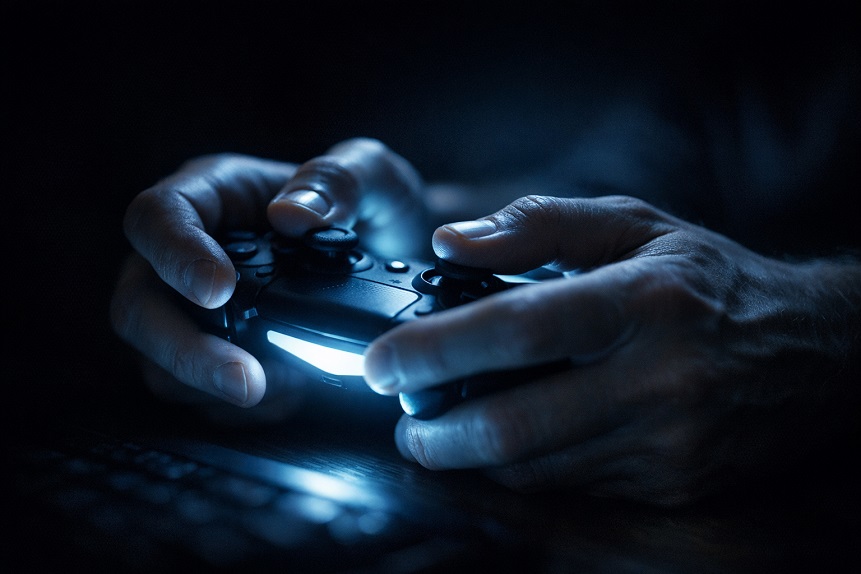
Joint health conversations almost always focus on people who move a lot: runners, lifters, manual workers, hikers. The population that spends eight to twelve hours a day with their eyes fixed on screens, their fingers performing thousands of rapid repetitive movements, and their necks loaded in forward flexion rarely appears in the joint health literature. This is partly because the consequences of sedentary tech use accumulate quietly over years before announcing themselves as clinical problems, and partly because there remains a cultural assumption that sitting at a computer or console is essentially neutral for the body rather than a specific pattern of loading with predictable consequences.
That assumption is increasingly hard to defend. The joint problems associated with heavy gaming and technology use are well-recognised in musculoskeletal medicine, they affect a population that skews young in ways that defy the expectation that joint problems are a middle-age phenomenon, and they are growing in prevalence as screen time continues to increase across every demographic. The college student who games for six hours daily, the developer who codes for eight hours before spending two more hours on their phone, and the content creator who edits on a tablet for their entire working day are all accumulating joint loading that deserves the same thoughtful management as any other repetitive activity.
Here is the specific joint stress profile of heavy gaming and tech use, the joints most at risk, and what a practical response looks like for the screen-generation population.
The Thumb and Wrist: Ground Zero for Gaming-Related Joint Stress
The thumb is the joint most singularly transformed by modern technology use, and it is suffering the consequences. The carpometacarpal (CMC) joint of the thumb, located at the base of the thumb where it meets the wrist, is responsible for the dexterous opposable movement that makes human hands unique among mammals. It is a saddle-shaped joint with extraordinary mobility in multiple planes, and it is also a joint with limited cartilage depth that is highly susceptible to the cartilage changes of repetitive overloading. The CMC joint was not evolved for the specific movement patterns of gamepad thumb-stick control, smartphone scrolling, or the rapid thumb-driven navigation of touchscreens, and the volume at which modern technology demands these movements is genuinely novel in human history.
Gamer’s Thumb: A Clinical Reality, Not a Joke
De Quervain’s tenosynovitis, an inflammation of the tendons on the thumb side of the wrist, and first carpometacarpal osteoarthritis are both significantly more prevalent in heavy gaming and smartphone populations than in matched non-gaming controls, with clinical case series from hand surgery practices in multiple countries documenting a marked increase in thumb-related presentations among young adults over the past decade. The pattern is consistent across gaming platforms, with controller gaming producing high-speed repetitive thumb-stick movement and mobile gaming producing sustained pinch and swipe patterns that concentrate stress on slightly different aspects of the same joint complex.
The cartilage of the CMC joint, like all articular cartilage, has limited capacity for self-repair once damaged. The collagen-rich tendons that control thumb movement respond to repetitive loading through the same collagen turnover dynamics as larger tendons, requiring adequate recovery between sessions and nutritional support for the synthesis pathway. OptiMSM® is the most directly relevant ingredient for these thumb and wrist tendons, providing the sulfur required for collagen synthesis that maintains their structural integrity under the daily loading volumes that heavy tech use generates.
Wrist Extensor and Flexor Overload
Beyond the thumb, the wrist extensor and flexor tendons that control overall wrist position during mouse and keyboard use accumulate the kind of sustained low-intensity loading that produces the forearm and wrist fatigue familiar to heavy computer users. The wrist is held in either neutral or slightly extended position for hours at a time while the finger tendons perform thousands of small-amplitude movements against the resistance of keys and mouse buttons. This combination of static postural loading in the wrist extensors and repeated dynamic loading in the finger flexors creates a pattern of tendon stress that can progress from mild fatigue to persistent tendinopathy without any single dramatic overload event. The cumulative nature of the problem means that the joints are technically fine right up to the point where they are not, which is why proactive tendon support through OptiMSM® and Glucosamine Sulfate 2KCL for the small wrist joint cartilage makes more sense than waiting for symptoms to arrive before acting.
The Neck and Upper Cervical Spine: The Price of Screen Posture
The relationship between screen use posture and cervical spine loading has been quantified with sufficient precision to make the numbers genuinely arresting. The head in a neutral, upright position weighs approximately four to five kilograms and is efficiently balanced over the cervical spine. In the forward head posture that is characteristic of screen use, where the head translates anterior to the shoulders and the chin drops toward the chest, the effective mechanical load on the cervical spine increases dramatically with every degree of forward tilt. At 30 degrees of forward tilt, the load approaches 18 kilograms. At 45 degrees, it approaches 22 kilograms. These are not hypothetical extremes: they are the typical postures of people using laptops on desks, tablets in their laps, and smartphones held below eye level, which is to say most people most of the time.
The facet joints and intervertebral discs of the cervical spine are designed to bear the load of a neutrally positioned head for hours of daily activity. They are not designed to bear the equivalent of four times the normal head load for the eight to twelve hours that heavy screen users accumulate daily. The cervical facet joints contain articular cartilage and synovial tissue that responds to sustained excessive loading with the same low-grade inflammatory changes and cartilage stress as larger peripheral joints. The neck stiffness, upper trapezius tension, and occipital headaches that heavy screen users experience are often the symptomatic surface of deeper cervical facet joint loading that has been accumulating for years. Managing the inflammatory component of this loading through CurcuWIN® and AprèsFlex® addresses the joint inflammation dimension; addressing the postural cause by raising screen height to eye level addresses the mechanical dimension that no supplement can reach.
The Hip and Lumbar Spine: What Gaming Sessions Do to Seated Posture
Extended gaming sessions introduce a specific seated posture problem that differs from standard desk work. Gamers tend to adopt a more reclined or sprawled position than the upright desk worker posture, often with the pelvis posteriorly tilted, the lumbar lordosis flattened, and the thoracic spine in exaggerated kyphosis. This posture distributes lumbar disc and facet joint loading differently from neutral sitting, often concentrating stress on the posterior disc and facet joint structures in ways that contribute to the lower back stiffness and discomfort that heavy gamers frequently experience. The hip flexors shorten adaptively in sustained hip flexion regardless of whether the posture is upright or reclined, and the hip joint cartilage experiences the nutrient deprivation of prolonged static loading without the movement-driven synovial fluid dynamics it needs.
For gamers whose sessions regularly extend to three, four, or more hours without movement breaks, the hip and lumbar joint picture adds to the wrist and cervical spine loading described above to create a whole-body pattern of joint stress that, while different in character from any athletic activity, is substantial in its cumulative magnitude. The same principles of movement break frequency and joint-supporting nutrition that benefit desk workers apply to gamers, and the same resistance to acknowledging that a sedentary activity can be genuinely demanding on the joints is present in both populations. Our article on how repetitive motion damages joints over time covers the mechanical principles behind this accumulation and applies directly to the tech use context.
A Practical Joint Health Strategy for Heavy Tech Users
The most impactful single change for any heavy screen user is the simplest and most consistently ignored: regular movement breaks. The joints most affected by tech use are suffering primarily from static loading, synovial fluid stagnation, and repetitive small-range movements, and the antidote to all three is varied movement that takes the affected joints through ranges of motion they do not access during the activity itself. A two-minute movement break every forty-five minutes that includes neck rotation, wrist circles, hip flexor stretches, and shoulder mobility work addresses the static and repetitive loading dimensions of tech use joint stress more directly than any nutritional intervention can.
Ergonomic adjustments, particularly raising screens to eye level, positioning keyboards and mice to maintain wrist neutrality, and using chair and desk setup that supports a pelvis-neutral seated position, reduce the mechanical loading that drives the problems. These are not optional refinements for people with existing symptoms: they are the foundational changes that prevent the gradual accumulation of joint stress that eventually produces those symptoms.
Nutritional joint support for heavy tech users should address both the tendon and small joint cartilage demands of wrist and thumb-intensive use, through OptiMSM® and Glucosamine Sulfate 2KCL, and the inflammatory management of the cervical facet joint and hip loading that sustained screen postures accumulate, through CurcuWIN® and AprèsFlex®. This is not a population that supplements typically target, which is partly why the joint health problems of heavy tech users go unaddressed for longer than they should. The biology is the same regardless of what caused the loading, and the nutritional response that helps a runner’s cartilage or a manual worker’s tendons is the same nutritional response that helps a gamer’s thumb joints and a developer’s cervical spine. Our article on joint health for desk workers covers the overlapping population of computer-based professionals with specific workplace ergonomic detail that applies equally to the home setup that most gamers and heavy tech users work from.
Frequently Asked Questions
- Is gaming really bad enough for joints to warrant supplement support?
- At low to moderate use levels, gaming does not represent a clinically significant joint stress pattern. At the levels of use, six or more hours daily, that characterise serious gamers and heavy tech users, the thumb CMC joint, wrist tendons, cervical spine, and hip joints are all experiencing loading patterns and volumes that have documented associations with early joint changes and tendon problems in clinical populations. Whether any individual user’s level of use warrants supplementation depends on their specific usage patterns, any existing symptoms, and their broader activity and health context rather than gaming use alone.
- Can a gaming setup be arranged to minimise joint stress?
- Yes, significantly. For PC gaming, monitor height at or slightly below eye level eliminates the downward neck tilt that drives cervical loading, a keyboard and mouse position that keeps the wrists neutral rather than extended or ulnar-deviated reduces wrist and forearm tendon stress, and a chair with good lumbar support and armrests that allow the elbows to rest near 90 degrees reduces shoulder and forearm fatigue. For console gaming, holding the controller at a height that keeps the neck neutral rather than looking down is the most impactful single adjustment. For mobile gaming, holding the device at eye level rather than in the lap eliminates most of the cervical loading problem.
- Are younger gamers less at risk than older ones?
- Young cartilage has greater repair capacity than older cartilage, which provides some resilience to the cumulative loading described here. However, the thumb CMC joint is among the joints that show age-related osteoarthritic changes earlier and more consistently than any other joint in the hand, and the loading patterns of heavy tech use accelerate this timeline. The increasingly common presentation of CMC osteoarthritis in people in their twenties and thirties who are heavy smartphone and gaming users represents exactly the outcome of young joints being asked to absorb loading volumes that their greater repair capacity does not fully protect against.
- What is the most effective immediate step for reducing gaming-related thumb pain?
- Reducing use volume is the most direct intervention for active thumb pain. If reducing use is not immediately feasible, splitting gaming sessions into shorter segments with complete thumb rest between them reduces the cumulative loading per day more effectively than using the same total hours in fewer, longer sessions. Warm-up movements before gaming, including gentle thumb opposition circles and wrist rotations, may reduce the initial loading stress on cold tendons. Ice after extended sessions can reduce acute inflammatory response. For persistent or worsening thumb pain, professional assessment by a hand therapist or sports medicine physician is the appropriate next step rather than self-management alone.
The joint problems of the screen generation are new enough that most joint health resources do not adequately address them, which means the people most affected often search for answers and find advice written for athletes or older adults with osteoarthritis. Neither quite fits. The good news is that the biology is the same regardless of what caused the loading, and the nutritional and lifestyle interventions that protect joints in other contexts apply equally well here. The harder challenge is acknowledging that something you do sitting still, in apparent comfort, is genuinely demanding something from your body that deserves to be met with appropriate support.