We only cite studies published in peer-reviewed journals. We summarize findings without overstating conclusions.
This article summarizes a systematic review and meta-analysis published on July 17, 2020, in BMC Complementary Medicine and Therapies (BioMed Central/Springer Nature), titled “Effectiveness of Boswellia and Boswellia Extract for Osteoarthritis Patients: A Systematic Review and Meta-Analysis.” The study was authored by Ganpeng Yu and Jun Li (co-corresponding authors, Department of Orthopaedics, People’s Hospital of Ningxiang City, Ningxiang, Hunan Province, China), alongside Wang Xiang (Graduate College, Guilin Medical University, and the Department of Rheumatology, Affiliated Hospital of Guilin Medical University, Guangxi Province, China), Tianqing Zhang (Graduate College, University of South China, and the Department of Cardiology, The First Affiliated Hospital of University of South China, Hengyang, Hunan Province, China), Liuting Zeng (Graduate College, Chinese Academy of Medical Sciences and Peking Union Medical College, Beijing, China), and Kailin Yang (Hunan University of Chinese Medicine, Changsha, Hunan Province, China). The review was registered on PROSPERO under identifier CRD42018086785 and followed PRISMA reporting guidelines. It pooled data from seven randomized controlled trials encompassing 545 participants with osteoarthritis, examining the effectiveness of Boswellia serrata and its concentrated extracts compared to placebo or conventional medicines. The full text is freely available at PubMed Central (PMC7368679).
The authors declare that they have no competing interests. This research received no specific grant from any funding agency in the public, commercial, or not-for-profit sectors.
Background: Frankincense, Inflammation, and the Search for NSAID Alternatives
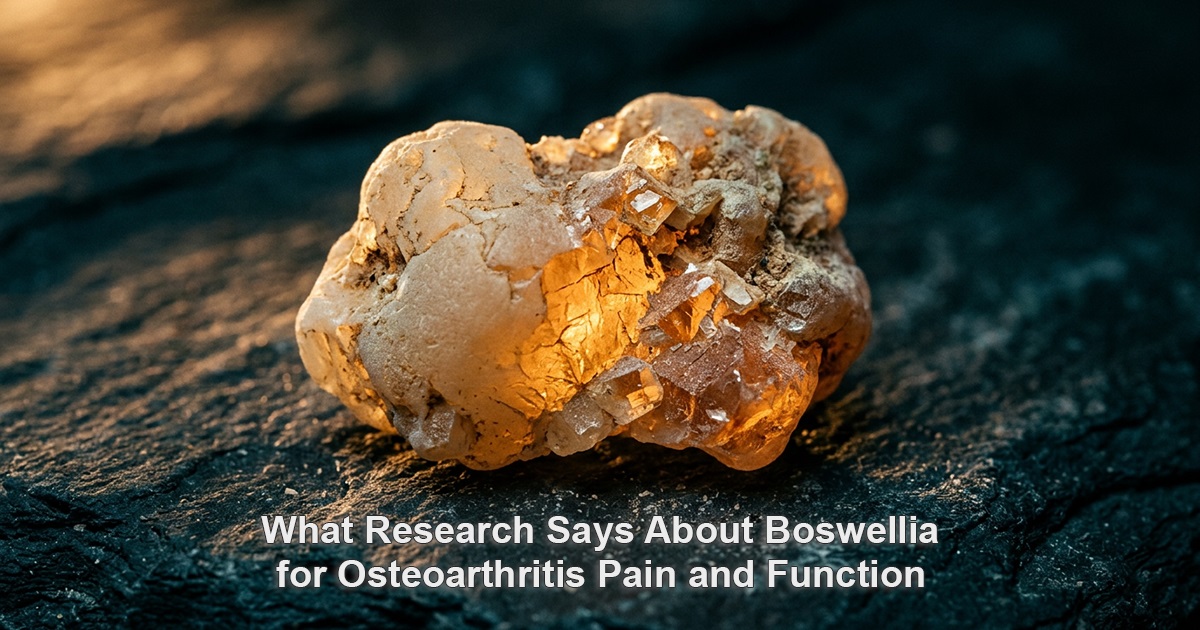
Boswellia serrata is a large deciduous tree native to the dry hill forests of India, North Africa, and the Middle East. Its trunk yields a fragrant resin – collected by making incisions in the bark and allowing the exudate to harden – that has been traded for thousands of years as frankincense and burned as incense in religious ceremonies from ancient Egypt to contemporary Catholic liturgy. But its significance in this context is entirely medicinal: the resin of Boswellia species has been a foundational component of Ayurvedic medicine (where the plant is called Shallaki or Salai guggal) and traditional Middle Eastern medicine for centuries, used specifically as an anti-inflammatory remedy for conditions including arthritis, inflammatory bowel disease, and asthma.
The scientific investigation of this traditional use began in earnest in the 1980s and 1990s, when pharmacologists began isolating and characterizing the plant’s active compounds. What emerged was a class of pentacyclic triterpenoid acids called boswellic acids, which represent the primary biologically active components of the resin. The most pharmacologically potent of these, and the one that has attracted the greatest research attention, is 3-O-acetyl-11-keto-β-boswellic acid, universally abbreviated as AKBA. As the authors summarize, AKBA has demonstrated powerful inhibitory activity against a specific inflammatory enzyme called 5-lipoxygenase – a mechanism that distinguishes it sharply from the NSAIDs that currently dominate OA pharmacotherapy and gives it a genuinely different pharmacological profile.
NSAIDs – the class that includes ibuprofen, naproxen, diclofenac, and COX-2 inhibitors like celecoxib – reduce inflammation primarily by blocking the cyclooxygenase (COX) enzymes, which produce prostaglandins, a family of lipid signaling molecules central to the inflammatory pain response. This approach is effective but carries well-documented risks: gastrointestinal bleeding and ulceration, renal toxicity, and (particularly for COX-2 selective inhibitors) cardiovascular adverse events with long-term use. For many older OA patients with comorbidities, long-term NSAID use is not a safe option. The clinical motivation for studying Boswellia, therefore, is real and well-grounded: if its anti-inflammatory mechanism is genuinely distinct from COX inhibition, it might offer meaningful pain relief through a complementary pathway, potentially with a more favorable safety profile.
Despite a growing body of individual clinical trials, no systematic review had previously focused exclusively on Boswellia and its extracts in OA – the most prevalent joint disease – at the time of this 2020 publication. Prior reviews had included Boswellia as one of many dietary supplements among larger analyses, limiting the specificity and reliability of their Boswellia-focused conclusions. Yu, Xiang, and colleagues designed this meta-analysis to fill that gap.
The Biology: How Boswellia’s Active Compounds Suppress Joint Inflammation
The 5-Lipoxygenase Pathway: A Different Route to Inflammation
To understand why AKBA’s mechanism of action is considered distinctive, it helps to understand the two main enzymatic pathways through which the body produces inflammatory lipid mediators from arachidonic acid – the fatty acid precursor to most pro-inflammatory signaling molecules.
The COX pathway, blocked by NSAIDs, converts arachidonic acid into prostaglandins and thromboxanes. These molecules drive the classic features of inflammation: fever, vasodilation, pain sensitization, and platelet aggregation. The 5-lipoxygenase (5-LOX) pathway, by contrast, converts arachidonic acid into a different family of lipid mediators called leukotrienes. Leukotrienes are potent pro-inflammatory compounds with particular importance in sustained or chronic inflammation: they promote the recruitment of neutrophils and other immune cells to inflammatory sites, increase vascular permeability, stimulate mucus production (relevant to asthma), and directly contribute to the cytokine environment that perpetuates joint inflammation in OA.
While NSAIDs leave the 5-LOX pathway essentially untouched, AKBA is a highly specific, non-redox inhibitor of 5-lipoxygenase – meaning it directly blocks the enzyme without acting through oxidative chemistry, which reduces the risk of off-target cellular damage. By suppressing 5-LOX, AKBA reduces leukotriene production and thereby dampens a component of the inflammatory cascade that NSAIDs do not address. In the context of OA, where joint inflammation involves both prostaglandin and leukotriene signaling, dual inhibition of these pathways – NSAID plus Boswellia – might theoretically offer superior benefit to either alone, though clinical evidence for this combination remains limited.
Additional Anti-Inflammatory Mechanisms
Laboratory and in vitro studies reviewed by the authors demonstrate that boswellic acids and AKBA exert anti-inflammatory effects through additional molecular mechanisms beyond 5-LOX inhibition. Acetyl-boswellic acids have been shown to inhibit the activation of NF-κB – the same “master switch” for inflammatory gene expression described in the curcumin and gut microbiome articles in this series – through direct interaction with IκB kinases, the enzymes responsible for releasing NF-κB from its inactive state in the cytoplasm. By interfering with IκB kinase activity, boswellic acids can suppress the LPS-mediated induction of TNF-α in monocytes, reducing the downstream cytokine cascade that drives synovial inflammation and cartilage degradation.
Studies in human microvascular endothelial cells (the cells lining small blood vessels that mediate the vascular component of inflammation) found that Boswellia inhibits the inducible expression of matrix metalloproteinase-3 (MMP-3) – one of the cartilage-degrading enzymes whose overexpression in inflamed OA joints contributes to irreversible cartilage loss. Suppression of MMP-3 expression is therefore not only anti-inflammatory but potentially structure-protective, though whether Boswellia produces meaningful structure modification in clinical OA patients remains unproven. In human immune cells (peripheral blood mononuclear cells and macrophages), AKBA has also been shown to inhibit TNF-α, IL-1β, nitric oxide, and MAPK kinase signaling – multiple convergent inflammatory pathways.
The pharmaceutical industry has developed concentrated proprietary extracts of Boswellia serrata standardized to specific AKBA content. The two most studied in clinical trials are 5-Loxin, standardized to contain 30 percent AKBA, and Aflapin, a synergistic composition of AKBA with non-volatile Boswellia oil that is claimed to increase bioavailability and potency. These proprietary standardized extracts are distinct from raw Boswellia resin powder, which contains only approximately 3 to 5 percent AKBA along with other boswellic acids of varying potency.
Methodology: How the Review Was Conducted
Search Strategy and Registration
The authors searched ten databases: Web of Science, the Chinese Science and Technology Periodical Database (VIP), Wan Fang Database, EMBASE, Medline Complete, the Chinese Biomedical Database (CBM), ClinicalTrials.gov, the China National Knowledge Infrastructure (CNKI), PubMed, and the Cochrane Library – covering records from database inception through January 2018. The inclusion of multiple Chinese-language databases reflects the same methodological breadth seen in the curcumin review from this same research group, capturing potentially relevant literature from traditional Chinese medicine research that English-only searches would miss. Search terms included “boswellic acid,” “Boswellia,” “Shallaki,” “Salai,” “aflapin,” “5-loxin,” and “osteoarthritis,” along with MeSH synonyms for OA (osteoarthritis, osteoarthrosis, degenerative arthritis).
Inclusion and Exclusion Criteria
Only randomized controlled trials were eligible. Participants had to have a specified, recognized diagnosis of osteoarthritis. The intervention in the experimental group had to be Boswellia or any of its extracts (with no restrictions on dose, formulation, or preparation). The comparator could be any other OA treatment: placebo, conventional pharmaceutical (such as ibuprofen or glucosamine sulfate), or other supplement combinations. Three researchers independently screened all records, with disagreements resolved by consensus.
The initial search returned 513 records. After removing those excluded based on title and abstract screening, 16 studies underwent full-text assessment. Seven met the final inclusion criteria. Nine studies were excluded: some because they were Ayurvedic multi-ingredient formulas in which Boswellia was only one of several active components and could not be isolated as the active intervention, some because they lacked appropriate comparator groups, and some for other design reasons. This exclusion of multi-ingredient Ayurvedic preparations is an important methodological decision – it was designed to produce a cleaner signal about Boswellia specifically, rather than Ayurvedic formulas in which Boswellia’s individual contribution to any observed benefit would be impossible to determine.
Outcomes Measured
Primary outcomes were: pain measured by the Visual Analog Scale (VAS, a 0–100 mm scale where 0 = no pain and 100 = worst imaginable pain); WOMAC pain (the pain subscale of the Western Ontario and McMaster Universities Osteoarthritis Index, scored 0–100); WOMAC stiffness (0–100); WOMAC function (0–100); and the Lequesne index (a disease-specific questionnaire assessing pain, walking distance, and functional limitation in knee OA, scored 0–24 with higher scores indicating greater impairment). Secondary outcomes were the same pain, stiffness, and function measures assessed at specific time points – week 4, week 8, and week 12 – to evaluate onset and time course of benefit.
Statistical Approach and Risk of Bias Assessment
RevMan 5.3 (the Cochrane Collaboration’s standard meta-analysis software) was used for all analyses. Continuous outcomes were expressed as weighted mean differences (WMDs) with 95% confidence intervals (CIs). Heterogeneity between trials was tested using the chi-squared test and I² statistic: when I² was below 50% and the p-value for heterogeneity exceeded 0.10, a fixed-effect model was applied; otherwise, a random-effects model was used to account for between-study variation. Risk of bias in each included trial was assessed using the Cochrane Collaboration’s tool, evaluating seven domains: random sequence generation, allocation concealment, blinding of participants and personnel, blinding of outcome assessors, completeness of outcome data, selective reporting, and other potential biases.
The Included Trials: Who Was Studied, What Was Given
The seven included trials spanned research teams in India (three trials), Armenia (one), Iran (one), and Italy (two), and were published between 2008 and 2018. All focused on knee OA – none examined hip or hand OA. Participants were predominantly in their early-to-mid fifties, with ages ranging across studies from the 40s to the mid-60s. The total sample was 545 patients: 305 in the Boswellia arms and 253 in control arms (the discrepancy arises from Sengupta’s two-dose design, where the control group was shared across two intervention arms per the Cochrane Handbook approach of splitting shared controls to avoid double-counting). Treatment durations ranged from 4 weeks (Vishal 2011; Karimifar 2017) to 24 weeks (the two Notarnicola trials), with three trials running 12 weeks.
The Boswellia preparations tested varied considerably across trials. Three trials used concentrated proprietary AKBA-enriched extracts: 5-Loxin (Sengupta 2008, in 100 mg and 250 mg doses) and Aflapin (Vishal 2011, 100 mg; Sengupta 2010, 100 mg comparing Aflapin directly against 5-Loxin). The Haroyan 2018 trial from Armenia used a combination of boswellic acid 150 mg plus curcuminoids 350 mg compared to placebo, making it impossible in isolation to attribute results to Boswellia alone – though the authors included it because the combined extract was the intervention arm. The Karimifar 2017 trial from Iran compared Boswellia combined with Elaeagnus angustifolia (Russian olive, another traditional anti-inflammatory plant) versus ibuprofen. The two Notarnicola Italian trials combined boswellic acid with methylsulfonylmethane (MSM, an organosulfur compound also studied for OA), comparing either to glucosamine sulfate (Notarnicola 2016) or to placebo (Notarnicola 2011).
This heterogeneity in preparations is one of the review’s key limitations and is discussed explicitly by the authors: when different combinations, different doses, different formulations, and different comparators are pooled, the resulting estimate reflects the average effect of “Boswellia and its preparations” as a class, not any specific product. A patient choosing between 100 mg of Aflapin, 250 mg of 5-Loxin, or 15 mg of boswellic acid in a combination supplement cannot use the pooled estimate as a reliable dose-specific guide.
Risk of Bias Summary
The risk-of-bias assessment revealed important methodological weaknesses across the included trials. Three trials (Karimifar 2017, Notarnicola 2016, Notarnicola 2011) did not describe their randomization procedures and were rated as having unclear risk for sequence generation. Three trials also had unclear or inadequate allocation concealment. For blinding, while all trials claimed to use double-blinding, only three (Haroyan 2018, Notarnicola 2016, Notarnicola 2011) adequately described how blinding was implemented; in the Sengupta and Vishal trials, the statisticians performing the data analysis were not blinded, generating a high risk of detection bias. The Vishal 2011 trial failed to report all pre-specified outcomes, earning a high risk for selective reporting. The Sengupta and Vishal trials also used a multiple-comparison correction (p < 0.017 rather than the conventional p < 0.05) without applying it consistently to their statistics, introducing a methodological inconsistency rated as high risk of other bias. The Haroyan 2018 trial similarly used a Bonferroni correction (p < 0.025 for two primary outcomes) without fully consistent application. Overall, no trial was judged as having uniformly low risk of bias across all domains.
Results: What the Pooled Evidence Shows
Primary Outcome: Pain Relief
Visual Analog Scale (VAS): Six trials (Vishal 2011, Sengupta 2008, Sengupta 2010, Karimifar 2017, Notarnicola 2016, Notarnicola 2011) reported VAS pain scores at the end of their treatment periods. The pooled analysis found a statistically significant benefit for Boswellia: WMD −8.33 mm (95% CI: −11.19 to −5.46; p < 0.00001). Heterogeneity was very high (I² = 94%, Tau² = 10.85, p < 0.00001), necessitating the use of a random-effects model. The effect size of 8.33 mm on a 100 mm scale is modest in absolute terms – conventional thresholds for minimum clinically important difference (MCID) on the VAS for OA pain are generally 10–15 mm – but the confidence interval extends to 11.19 mm, suggesting some patients may experience benefit reaching the MCID boundary. The direction of effect is consistent across trials, and the result is highly statistically significant despite the small number of trials.
WOMAC Pain: Four trials (Sengupta 2008, Sengupta 2010, Haroyan 2018, and Karimifar 2017) reported WOMAC pain subscale scores. The pooled result showed a statistically significant benefit: WMD −14.22 (95% CI: −22.34 to −6.09; p = 0.0006). Heterogeneity was extreme (I² = 99%, Tau² = 94.69, p < 0.00001). A weighted mean difference of 14.22 on the WOMAC pain subscale (which typically runs 0–100) represents a clinically meaningful effect under most published MCID estimates for the WOMAC, which range from approximately 9 to 15 points depending on the study population and analysis method. The confidence interval’s upper boundary of 22.34 suggests that individual patients may experience substantially larger benefits. The extreme heterogeneity, however, signals that the true effect varies enormously across studies – some finding larger benefits, some smaller – and the pooled estimate should be interpreted cautiously.
Primary Outcome: Stiffness
WOMAC Stiffness: Four trials (Sengupta 2008, Sengupta 2010, Vishal 2011, Haroyan 2018) contributed stiffness data. The pooled result significantly favored Boswellia: WMD −10.04 (95% CI: −15.86 to −4.22; p = 0.0007), again with very high heterogeneity (I² = 97%, Tau² = 44.40, p < 0.00001). Joint stiffness – the sensation of resistance when attempting to move after periods of rest – is one of the most disabling features of OA for patients, and a reduction of approximately 10 points on the WOMAC stiffness scale would represent a perceptible and practically significant improvement in morning and post-rest stiffness.
Primary Outcome: Physical Function
WOMAC Function: Four trials (Sengupta 2008, Sengupta 2010, Vishal 2011, Haroyan 2018) provided functional data. The pooled result again significantly favored Boswellia: WMD −10.75 (95% CI: −15.06 to −6.43; p < 0.00001), with high heterogeneity (I² = 93%, Tau² = 23.03, p < 0.00001). Physical function encompasses the ability to perform activities of daily living – stair climbing, walking, getting in and out of chairs and cars – that are severely impacted in moderate to severe knee OA.
Lequesne Index: Six trials (Vishal 2011, Sengupta 2008, Sengupta 2010, Karimifar 2017, Notarnicola 2016, Notarnicola 2011) reported the Lequesne index, a disease-specific measure of pain, functional limitation, and maximum walking distance for knee and hip OA, scored 0–24 (higher = worse). The pooled result significantly favored Boswellia: WMD −2.27 (95% CI: −3.08 to −1.45; p < 0.00001). Notably, this was the only primary outcome with low-to-moderate heterogeneity (I² = 47%, p = 0.07), meaning the six contributing trials were considerably more consistent with one another on this measure than on the WOMAC subscales or VAS. This consistency makes the Lequesne index finding the most statistically robust of the primary outcomes. A reduction of approximately 2.3 points on the Lequesne scale represents a meaningful shift in a disease-specific functional assessment.
Secondary Outcomes: Time Course of Benefit
An important secondary analysis examined whether benefits emerged and accumulated at 4, 8, and 12 weeks of treatment separately. The authors found that statistically significant improvements in both VAS and WOMAC pain were already present at week 4 (VAS WMD −6.38, 95% CI: −10.20 to −2.57, p = 0.001; WOMAC pain WMD −6.91, 95% CI: −11.08 to −2.74, p = 0.001). Effects persisted and generally increased at weeks 8 and 12. The VAS improvement at week 12 was particularly large: WMD −19.37 (95% CI: −23.90 to −14.85; p < 0.00001), with lower heterogeneity (I² = 43%; fixed-effect model), though only two trials contributed this 12-week VAS data point, limiting generalizability. WOMAC pain at week 12 showed WMD −12.37 (95% CI: −19.47 to −5.26; p = 0.0006) from three trials. Stiffness and function showed similar patterns – significant at 4 weeks and maintained through 12 weeks. These time-course findings support the authors’ recommendation that treatment duration of at least 4 weeks is necessary to observe benefit, and suggest that longer treatment may produce greater gains.
This also implies a plausible clinical recommendation: a minimum 4-week trial period at adequate doses (100–250 mg of concentrated extract) is needed to evaluate whether an individual patient responds. Stopping treatment after 1–2 weeks because of limited initial benefit may not reflect the supplement’s true potential.
Adverse Events: Limited but Generally Reassuring Data
Five of the seven included trials reported adverse events. Three of these five reported no adverse events in either the Boswellia or the control group – a finding that is reassuring but also limits the amount of comparative safety data available. The two trials with reported events were included in the pooled adverse event analysis. The pooled risk ratio for adverse events was 0.63 (95% CI: 0.22 to 1.83; p = 0.39), indicating no statistically significant difference in adverse event rates between the Boswellia and control groups. The wide confidence interval (which spans from less than a quarter to nearly double the control group’s rate) reflects the very small number of events contributing to this analysis and means the safety estimate is statistically imprecise rather than definitively reassuring.
The authors supplement this clinical safety data with reference to dedicated preclinical toxicology studies conducted in rats under OECD guidelines, which found no toxic manifestations for either 5-Loxin or Aflapin at doses well above clinical ranges. Notably, the acute oral lethal dose (LD50) for the standardized AKBA extract in rats was greater than 2 g/kg – indicating a wide safety margin at the clinical doses used in OA trials (100–250 mg). These animal toxicology findings are appropriately described as supporting evidence for safety rather than proof, since animal models do not perfectly predict human safety, and clinical trial adverse event reporting was too sparse to draw firm conclusions.
A Note on the Sengupta Trials and Industry Connection
Three of the seven included trials – Sengupta 2008, Sengupta 2010, and Vishal 2011 – were conducted by the same research team and tested proprietary Boswellia extracts (5-Loxin and Aflapin) that were developed and manufactured commercially. These trials collectively represent a large portion of the data pool, particularly for the WOMAC subscale analyses. The risk-of-bias assessment rated these trials as having high risk of bias for statistical methodology (specifically, application of multiple-comparison corrections) and high detection bias (unblinded statisticians). While the paper does not explicitly describe commercial funding for these trials, readers should note that proprietary extract trials with investigator overlap and commercial product interest are a recognized source of potential bias in supplement research, as discussed in other reviews in this series. The authors do not flag this as explicitly as the curcumin review’s authors flagged their industry-funded trials, but it is a relevant contextual consideration.
Limitations: What the Evidence Cannot Establish
The authors are forthright about the limitations of their analysis, and these deserve the reader’s full attention.
The most consequential limitation is the extreme heterogeneity across outcomes. I² values of 93 to 99 percent for WOMAC pain, stiffness, function, and VAS indicate that the seven contributing trials reached dramatically different conclusions about the magnitude of Boswellia’s benefit. When heterogeneity is this high, the pooled estimate is not a reliable indicator of what any single trial found or what a new patient might expect. The heterogeneity could reflect genuine biological differences – different Boswellia preparations, different AKBA concentrations, different comparators – or methodological differences in how outcomes were measured, reported, and analyzed. The authors attribute much of it to variability in the standardization of Boswellia manufacturing processes and to the use of different control groups (placebo, ibuprofen, glucosamine sulfate), which creates different baseline comparisons. The Lequesne index, with the lowest heterogeneity in the analysis (I² = 47%), may therefore be the most reliable single estimate in the entire meta-analysis.
The overall sample size is small for a meta-analysis: 545 participants across seven trials. By the standards of large-scale OA drug trials (which typically enroll hundreds to thousands of participants), this is a modest evidence base. Small samples are more susceptible to spuriously large effects, particularly when combined with the methodological weaknesses described in the risk-of-bias assessment.
The absence of information on adverse events in most trials is a real limitation. Three of five reporting trials found zero adverse events in both groups – which may be true, or may reflect incomplete or selective adverse event reporting (known as reporting bias for safety outcomes). The authors acknowledge explicitly that absence of adverse event reports does not mean the intervention is safe, and call for future trials to report harms systematically and completely.
The review could not determine the optimal dose beyond the range tested in the included trials (100–250 mg of concentrated extract per day). No trial reported on effects before week 4, so the trajectory of benefit in the first month is unknown. No trial examined doses outside the 100–250 mg range in a way that allowed systematic comparison. Non-knee OA – hip, hand, spinal – is entirely unrepresented.
Because the included trials were predominantly from India and covered relatively short durations (the longest being 24 weeks), long-term safety and efficacy beyond six months are unknown, and generalizability to other patient populations may be limited.
Finally, no structural outcome data (radiographic joint space, cartilage volume on MRI) was reported in the included trials. The review can speak to symptom relief but says nothing about whether Boswellia modifies the underlying disease progression – a question of significant interest given the 5-LOX pathway’s theoretical role in cartilage-degrading MMP production.
Summary of Key Takeaways
- Boswellia serrata resin and its concentrated extracts (particularly AKBA-enriched preparations such as 5-Loxin and Aflapin) exert anti-inflammatory effects through a mechanism distinct from NSAIDs: they are potent, specific inhibitors of 5-lipoxygenase (5-LOX), the enzyme responsible for producing leukotrienes – a class of pro-inflammatory lipid mediators not addressed by COX-inhibiting drugs. Additional mechanisms include NF-κB pathway suppression and inhibition of MMP-3 expression in endothelial cells.
- This systematic review and meta-analysis – the first dedicated exclusively to Boswellia and its extracts for OA – pooled data from seven randomized controlled trials and 545 participants with knee OA, spanning trials from India, Armenia, Iran, and Italy, published between 2008 and 2018.
- Pooled results showed statistically significant benefits for Boswellia across all five primary outcome measures: VAS pain (WMD −8.33 mm; 95% CI: −11.19 to −5.46; p < 0.00001), WOMAC pain (WMD −14.22; 95% CI: −22.34 to −6.09; p = 0.0006), WOMAC stiffness (WMD −10.04; 95% CI: −15.86 to −4.22; p = 0.0007), WOMAC function (WMD −10.75; 95% CI: −15.06 to −6.43; p < 0.00001), and Lequesne index (WMD −2.27; 95% CI: −3.08 to −1.45; p < 0.00001).
- The Lequesne index analysis had the lowest heterogeneity (I² = 47%) and is therefore the most statistically reliable primary finding. WOMAC outcomes had extremely high heterogeneity (I² = 93–99%), reflecting wide variation in results across the few contributing trials and substantially limiting confidence in the precise magnitude of WOMAC-based estimates.
- Secondary analyses showed that significant improvements in both pain and stiffness are measurable by week 4, with effects maintained and generally increasing through week 12 for trials running that long. The authors recommend a minimum treatment duration of 4 weeks at doses of at least 100–250 mg of concentrated extract daily to evaluate individual response.
- Adverse event data were sparse and inconsistently reported. The pooled risk ratio for adverse events showed no statistically significant difference between Boswellia and control (RR 0.63; 95% CI: 0.22 to 1.83; p = 0.39), but the wide confidence interval means safety cannot be definitively established from the clinical trial evidence alone. Preclinical toxicology studies in rats found no toxic effects at doses well above those used clinically.
- No trial achieved uniformly low risk of bias across all Cochrane domains. Particular concerns include inadequate blinding of outcome assessors in the Sengupta trials, unclear allocation concealment in multiple trials, and selective reporting. The overall quality of the RCT evidence base is rated as medium to low by the authors, requiring cautious interpretation of all findings.
- The evidence base is limited to knee OA, covers only short-to-medium treatment durations (4–24 weeks), and entirely lacks structural outcome data. Whether Boswellia modifies OA progression – slowing cartilage loss or joint space narrowing – cannot be determined from current trials. Larger, methodologically rigorous, double-blind RCTs with standardized preparations, longer follow-up, and comprehensive adverse event reporting are needed to confirm and refine these findings.
Yu, Ganpeng, Wang Xiang, Tianqing Zhang, Liuting Zeng, Kailin Yang, and Jun Li. “Effectiveness of Boswellia and Boswellia Extract for Osteoarthritis Patients: A Systematic Review and Meta-Analysis.” BMC Complementary Medicine and Therapies, vol. 20, 2020, article 225. https://doi.org/10.1186/s12906-020-02985-6. Full text available at: https://pmc.ncbi.nlm.nih.gov/articles/PMC7368679/.