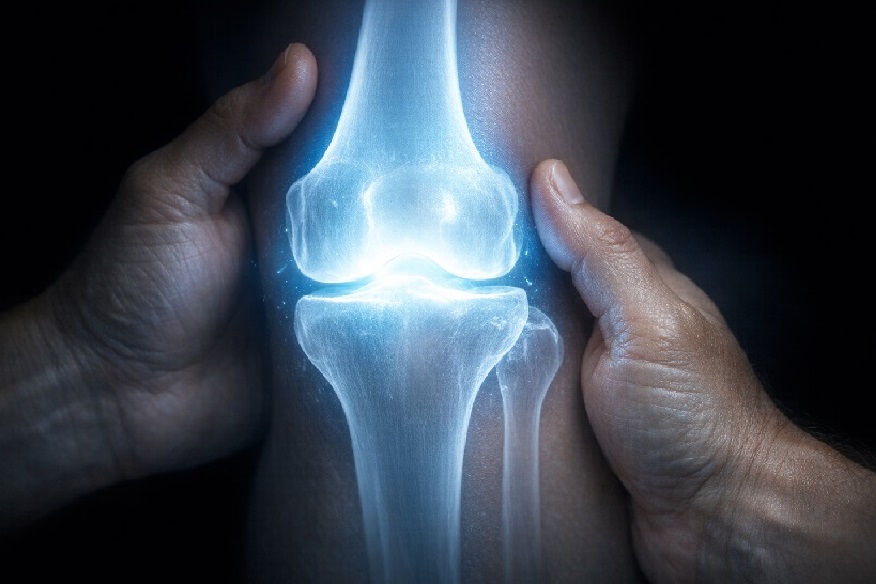
Few pieces of medical advice are delivered with more confidence and less specificity than “losing weight will help your joints.” The advice is directionally correct, the evidence is solid, and the frustration it generates in people who are genuinely trying to manage both their weight and their joint pain is considerable. Knowing that weight affects joint health does not tell you how much weight loss is needed to produce meaningful improvement, which joints benefit most, what the mechanisms are, or how to achieve weight loss in a way that does not itself generate additional joint stress through inappropriate exercise. These specifics matter, and the research is specific enough to provide them.
This article addresses the weight-joint connection with the precision it deserves, covering the mechanical and inflammatory mechanisms by which body weight affects joints, the evidence on how much weight loss produces how much joint health improvement, which joints are most sensitive to weight change, and what the most joint-protective approaches to weight management look like.
The Mechanical Connection: How Body Weight Amplifies Joint Loading
The most straightforward mechanism by which body weight affects joint health is mechanical: heavier bodies transmit greater forces through weight-bearing joints during every step, stair climb, and squat of daily life. The relationship is not linear at a 1:1 ratio. Research on knee biomechanics during walking has established that each additional kilogram of body weight adds approximately three to four kilograms of force across the knee joint with each step, and up to six to seven kilograms during stair climbing. This amplification effect means that a ten kilogram weight increase subjects knee cartilage to an additional thirty to seventy kilograms of compressive force per step, repeated thousands of times daily.
The implications run in both directions, which is where the weight loss intervention evidence becomes motivating. If gaining ten kilograms substantially increases knee joint loading, losing ten kilograms substantially reduces it. Research on the impact of weight loss on knee joint forces has confirmed this: a five percent body weight reduction produces approximately twenty percent reduction in the compressive forces across the knee during walking. A ten percent body weight reduction produces a disproportionate reduction in knee joint loading that translates into meaningful symptomatic improvement in osteoarthritis outcome measures. This non-linear dose-response, where a modest weight reduction produces a proportionally larger joint force reduction, is one of the most practically encouraging findings in the weight-joint research literature.
The Inflammatory Connection: Adipose Tissue as an Inflammatory Organ
The mechanical loading story is only part of the weight-joint relationship. Adipose tissue, particularly visceral adipose tissue (fat stored around the abdominal organs), is not an inert energy storage depot. It is an endocrinologically active tissue that produces a range of signalling molecules called adipokines, including leptin, adiponectin, resistin, and others, that have significant effects on systemic and joint-local inflammation.
Leptin: The Adipokine Most Directly Implicated in Cartilage Degradation
Leptin, produced in proportion to adipose tissue volume and best known for its role in appetite regulation, has been found in synovial fluid of arthritic joints and has documented effects on chondrocyte behaviour. Elevated leptin levels stimulate chondrocytes to produce inflammatory cytokines and MMP enzymes that accelerate cartilage matrix degradation, creating a direct molecular link between adipose tissue volume and the cartilage-degrading activity within the joint environment. This adipokine mechanism helps explain a phenomenon that the purely mechanical model struggles to account for: why people with obesity have elevated rates of osteoarthritis in joints that do not bear significant body weight, including the hands. The inflammatory adipokine environment affects all joint-lining tissue, not only the weight-bearing joints subjected to amplified mechanical loading.
Weight Loss Reduces Systemic Inflammation Independent of Exercise
Intentional weight loss, even when achieved through caloric restriction alone without exercise, reduces circulating leptin levels, increases adiponectin (an anti-inflammatory adipokine), and reduces CRP and other inflammatory biomarkers. This systemic anti-inflammatory effect of weight loss complements the mechanical joint force reduction and contributes to joint symptom improvement through a pathway independent of loading change. It also explains why weight loss of even five to ten percent, which does not dramatically change the appearance of body composition, can produce meaningful joint symptom improvements that go beyond what the modest force reduction alone would predict.
The Evidence on How Much Weight Loss Helps: Specific and Encouraging
Several landmark clinical trials and systematic reviews have examined weight loss and knee osteoarthritis outcomes with sufficient rigour to produce specific, clinically meaningful conclusions. The ADAPT trial, which examined diet alone versus exercise alone versus the combination versus control in overweight adults with knee osteoarthritis, found that the combined diet and exercise intervention producing the most weight loss also produced the greatest improvements in pain, function, and mobility, with effects that substantially exceeded the additive individual effects of either intervention alone. This synergy between weight loss and exercise for joint outcomes is one of the most consistently replicated findings in osteoarthritis research.
The Intensive Diet and Exercise for Arthritis (IDEA) trial compared diet-induced weight loss with exercise versus exercise alone in obese older adults with knee osteoarthritis. Participants achieving ten percent weight loss through diet plus exercise showed improvements in knee compressive forces, pain scores, and inflammatory markers (including IL-6 and CRP) that meaningfully exceeded the exercise-alone group. The research has established that five percent weight loss is the minimum threshold associated with noticeable clinical improvement in knee osteoarthritis outcomes, and ten percent produces improvements across both mechanical and inflammatory domains simultaneously.
For non-weight-bearing joints, the evidence reflects the adipokine mechanism rather than the mechanical one: hand osteoarthritis risk and severity are modestly but measurably associated with body weight in research, reflecting the systemic inflammatory effects of adipose tissue on joint tissue throughout the body. Hip osteoarthritis is sensitive to body weight through both the mechanical and inflammatory mechanisms, with hip joint forces amplified by body weight during many activities and adipokine-driven inflammation affecting hip cartilage as much as knee cartilage.
The Most Joint-Protective Approach to Weight Management
Achieving the weight loss that benefits joint health requires navigating the practical challenge that many effective weight loss approaches involve exercise that is itself a joint stressor. High-impact exercise for weight management, such as running or high-intensity interval training on hard surfaces, generates aerobic fitness and caloric expenditure but may exceed joint tolerance in people who are significantly overweight with existing joint discomfort. The most joint-protective weight loss approach combines low-impact aerobic exercise (swimming, cycling, aquatic exercise, elliptical) with strength training for muscle maintenance and metabolic support, alongside dietary changes that achieve a caloric deficit without eliminating the nutrients relevant to joint tissue maintenance.
Dietary quality matters beyond caloric restriction for joint outcomes. Achieving a caloric deficit through restriction of ultra-processed foods, refined carbohydrates, and seed oils while maintaining adequate protein (for muscle preservation and connective tissue synthesis) and dietary polyphenols and omega-3s from whole food sources produces the dual benefits of weight reduction and improved dietary anti-inflammatory profile. This approach is more beneficial for joint health than equivalent caloric restriction achieved by portion-reducing an otherwise unchanged dietary pattern, because the dietary quality change adds an anti-inflammatory benefit that caloric restriction alone does not provide.
For people managing both body weight and joint health simultaneously, the most important insight is that the relationship is mutually reinforcing in both directions. Excess weight worsens joint health through both mechanical and inflammatory mechanisms, making physical activity more painful and therefore harder to sustain, which contributes to further weight gain. Conversely, even modest weight loss reduces joint loading and inflammatory burden, improving the comfort of physical activity and making it easier to sustain the activity levels that support both continued weight management and ongoing joint health. Breaking into this cycle from the weight side through dietary change, from the activity side through accessible low-impact exercise, or from the joint health side through effective nutritional supplementation that reduces inflammatory burden enough to improve exercise tolerance: any of these entry points can begin the positive feedback cycle that the negative cycle had been sustaining. Our article on exercises that support joint health without straining it covers the activity side of this equation in practical detail.
Frequently Asked Questions
- How much weight do I need to lose to notice a difference in joint pain?
- Research suggests that five percent body weight loss is the minimum threshold associated with noticeable clinical improvement in knee osteoarthritis symptoms. For a person weighing 90 kilograms, that is approximately 4.5 kilograms. Ten percent body weight loss produces improvements across both mechanical loading and inflammatory dimensions simultaneously, which is why the ten percent target appears repeatedly in osteoarthritis weight management research as the level where the most comprehensive joint health benefits are consistently documented.
- Does gaining weight in muscle rather than fat affect joint health?
- Muscle mass and fat mass have opposite effects on joint health despite both contributing to body weight on the scale. Muscle mass surrounding a joint actively absorbs and distributes loading forces, reducing the compressive and shear stress experienced by articular cartilage and passive joint structures. Adipose tissue contributes mechanical loading without the protective absorption function and additionally produces adipokines that drive joint inflammation. Gaining muscle while losing fat (body recomposition) produces the best of both outcomes: a net reduction in mechanical joint loading combined with improved active joint protection, without the adipokine-driven inflammatory contribution of fat mass.
- Is it safe to exercise for weight loss if my joints are already painful?
- Yes, with appropriate exercise selection and progression. The most joint-protective weight loss exercise approaches for people with existing joint pain are aquatic exercise, cycling, swimming, and elliptical training, which provide the caloric expenditure needed for weight management without the impact loading that exceeds joint tolerance. Strength training in ranges of motion that do not provoke significant pain builds the muscle mass that reduces joint loading and improves metabolic rate, supporting continued weight management even when aerobic exercise capacity is limited by joint symptoms. Beginning with what the joint can tolerate and building from there is consistently more effective than waiting for significant weight loss before starting exercise.
- Can being underweight also affect joint health negatively?
- Yes, though for different reasons than overweight. Being significantly underweight is associated with reduced bone density, which can worsen subchondral bone health in ways that affect articular cartilage mechanics. Low body weight is also associated with reduced muscle mass in many cases, which reduces the active joint protection provided by surrounding musculature. Very low body weight can also indicate nutritional deficiencies that directly impair collagen synthesis and cartilage matrix maintenance. The optimal body weight range for joint health corresponds broadly to the healthy BMI range, with the joint health benefits of both weight loss (for those above the range) and weight gain (for those below it) being best framed in terms of the specific mechanisms described rather than an arbitrary weight target.
The weight-joint connection is one of the most actionable relationships in joint health, because body weight is genuinely modifiable in ways that joint anatomy is not. Even modest weight reduction produces joint force and inflammatory changes that translate into measurable improvements in daily joint comfort and function, and those improvements make further activity and further health improvement easier. The virtuous cycle is available to anyone who finds an entry point into it, and the joint health benefits of that cycle compound in ways that make the first steps disproportionately valuable relative to the effort they require.